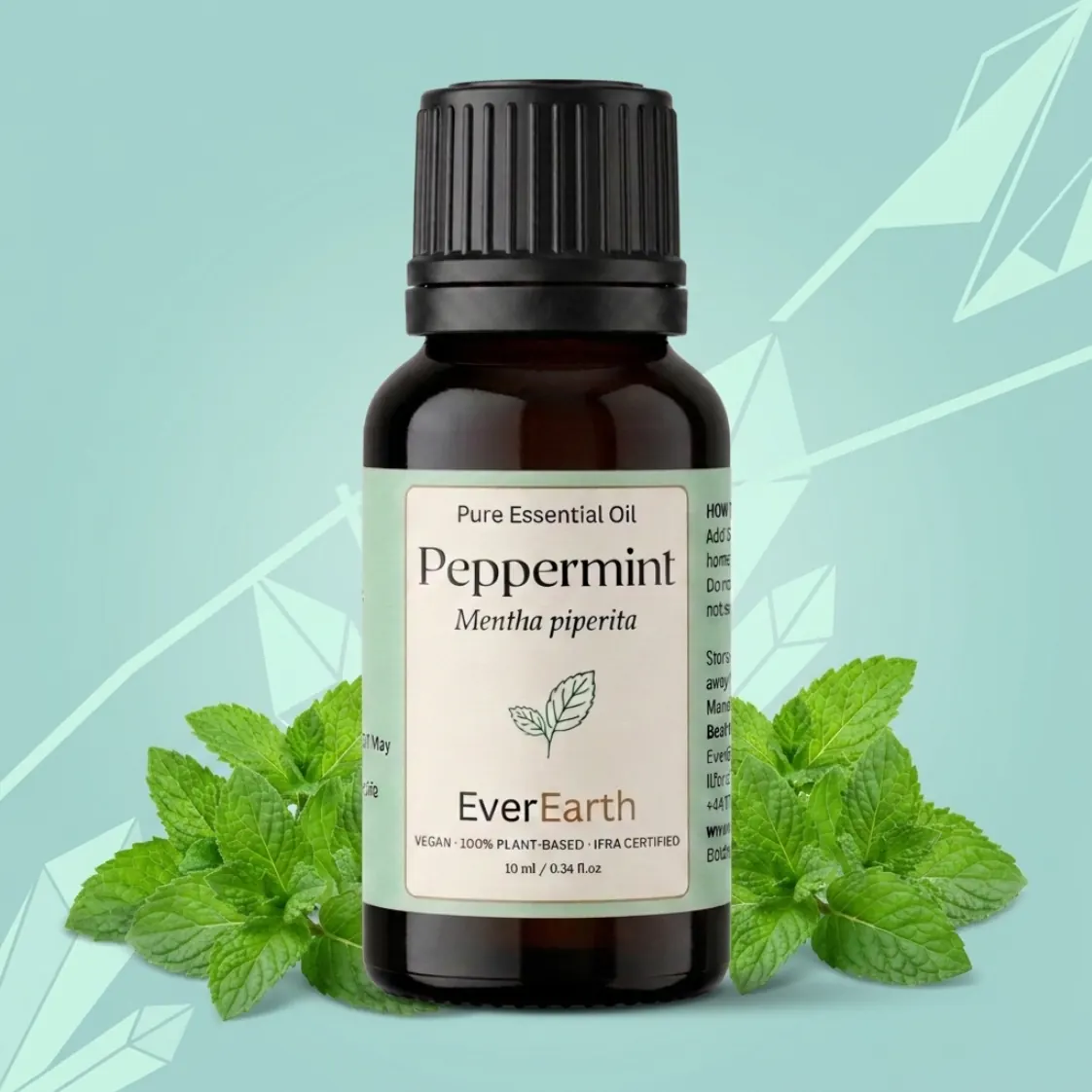
Peppermint Oil: Benefits, Everyday Uses, and How to Get the Blend Right
Peppermint is the opposite of lavender. Where lavender is soft, floral, and evening, peppermint is bright, cool, and unmistakably awake. A bottle of peppermint oil is one of the most useful oils to keep on a shelf, but it rewards a light hand. Too many drops and a room stops smelling like a garden and starts smelling like a dental clinic.
The oil is steam-distilled from the leaves of Mentha piperita, the peppermint plant. It is high in menthol, which is what gives it the cooling, tingling quality you notice within a second of opening the bottle. That same menthol is what makes peppermint one of the most researched essential oils for focus, alertness, and comfort during headaches.
What peppermint oil is genuinely good for
The evidence is strongest in three areas. First, alertness. Inhaling peppermint during afternoon slumps has been shown in small studies to improve reaction time and sustained attention. It is a modest effect, comparable to a short walk, but noticeable.

Second, tension headaches. Diluted peppermint oil applied to the temples has decades of anecdotal use and a handful of trials reported as helpful for a tired forehead. It will not do much for migraines, but for a screen-tired forehead at 4pm it is a reasonable first move.
Third, room freshening. Peppermint has natural antimicrobial properties and a scent strong enough to lift a stale room in seconds. A couple of drops in a diffuser after cooking, or on a cotton pad near the front door, resets the air quickly.
How to use it without overpowering the room
The most important thing about peppermint is that it is roughly twice as loud as most other essential oils. Whatever number of drops you use for lavender, halve it for peppermint. In a 200ml diffuser, two drops is enough. Three is assertive. Four is a mistake.
Blending is where peppermint really shines. On its own it can feel medicinal. With one other oil, it turns into something people actively enjoy.
**Peppermint and lemon** is the classic bright morning blend. Two drops of each in the diffuser while you make coffee, and the flat has completely different energy by the time you sit down.
**Peppermint and eucalyptus** is the focus blend. Two drops each for a study session, a long email, or any task where you want to feel clear-headed. Do not use it late at night, both oils are stimulating.
**Peppermint and jasmine** is the surprisingly good one. The citrus warmth takes the edge off the menthol and turns a bracing scent into a genuinely pleasant one. Try it on a slow Sunday afternoon.
Topical use, done sensibly
For temples during a tension headache, mix one drop of peppermint oil into a teaspoon of a carrier oil like fractionated coconut, and apply gently to the temples and the back of the neck. Keep it well away from the eyes, the vapour alone is enough to sting.
For tired feet at the end of a long day, one drop of peppermint in a bowl of warm water with a spoon of full-fat milk (to help it disperse) is a five-minute reset. Do not skip the milk, neat peppermint on wet skin is more intense than most people expect.
Two things to avoid
Do not diffuse peppermint around babies or young children in a small room. The menthol can affect their breathing more sharply than it does adults. Adjacent rooms are fine, direct exposure is not worth the risk.
Do not use peppermint late in the evening if you struggle to fall asleep. It is stimulating on purpose. Save it for mornings, afternoons, and any moment you want the day to feel a little sharper.
One bottle of good peppermint oil, used two drops at a time, lasts most households the best part of a year. It is one of the cheapest and most effective mood upgrades you can keep in a cupboard.