How to Use Essential Oils: A Practical Beginner's Guide
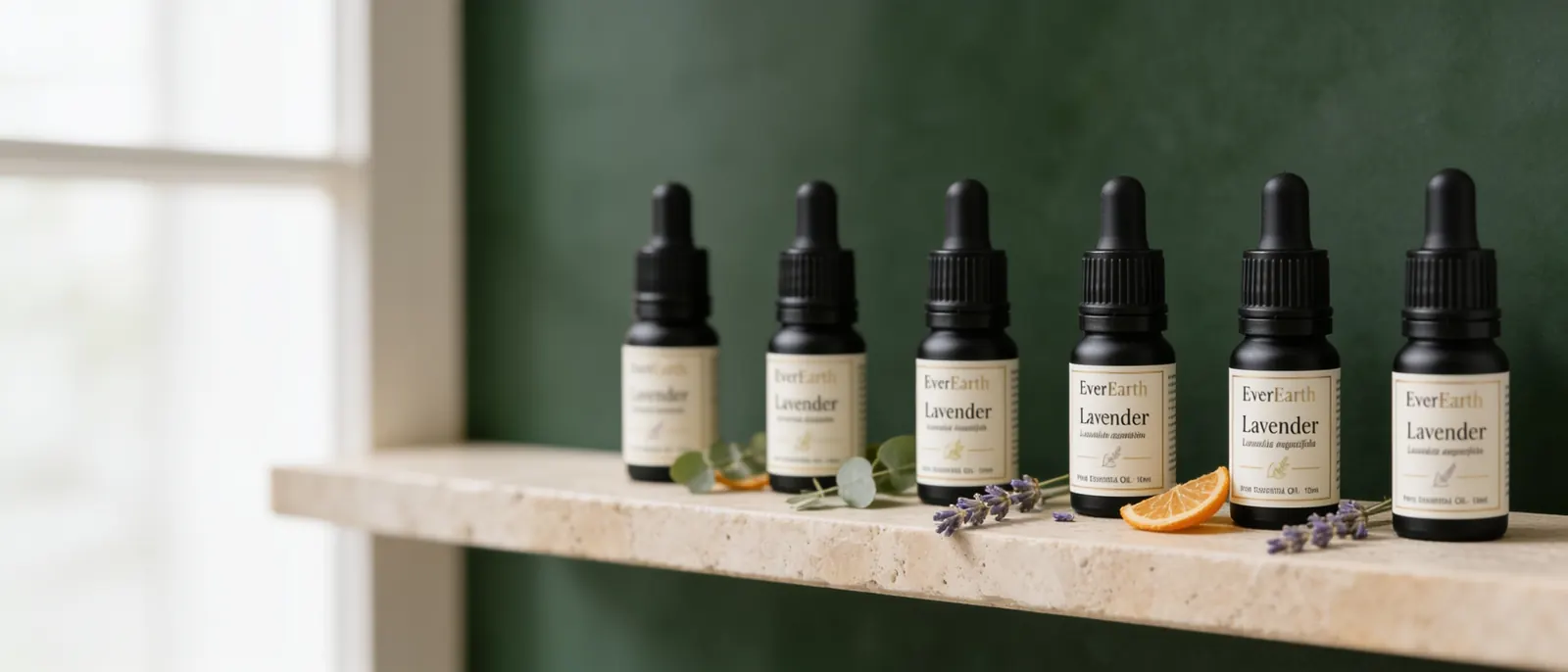
Essential oils are simpler than the internet makes them look. They are concentrated plant extracts, usually distilled from flowers, leaves, peels, or bark. A bottle of lavender oil is a lot of lavender plants reduced to a few teaspoons of liquid. That is why a couple of drops is enough, and why the same bottle lasts most people the best part of a year.
There are only three methods worth learning as a beginner: diffusing, topical use with a carrier, and passive scenting. Everything else is either a variation on those, or something you should skip.
Method one, diffusing
This is the easiest and safest way to use essential oils, and it is where every beginner should start. An ultrasonic diffuser is a small unit with a water tank and a vibrating disc. You fill the tank, add a few drops of oil, and it releases a cool mist that carries the scent through the room.
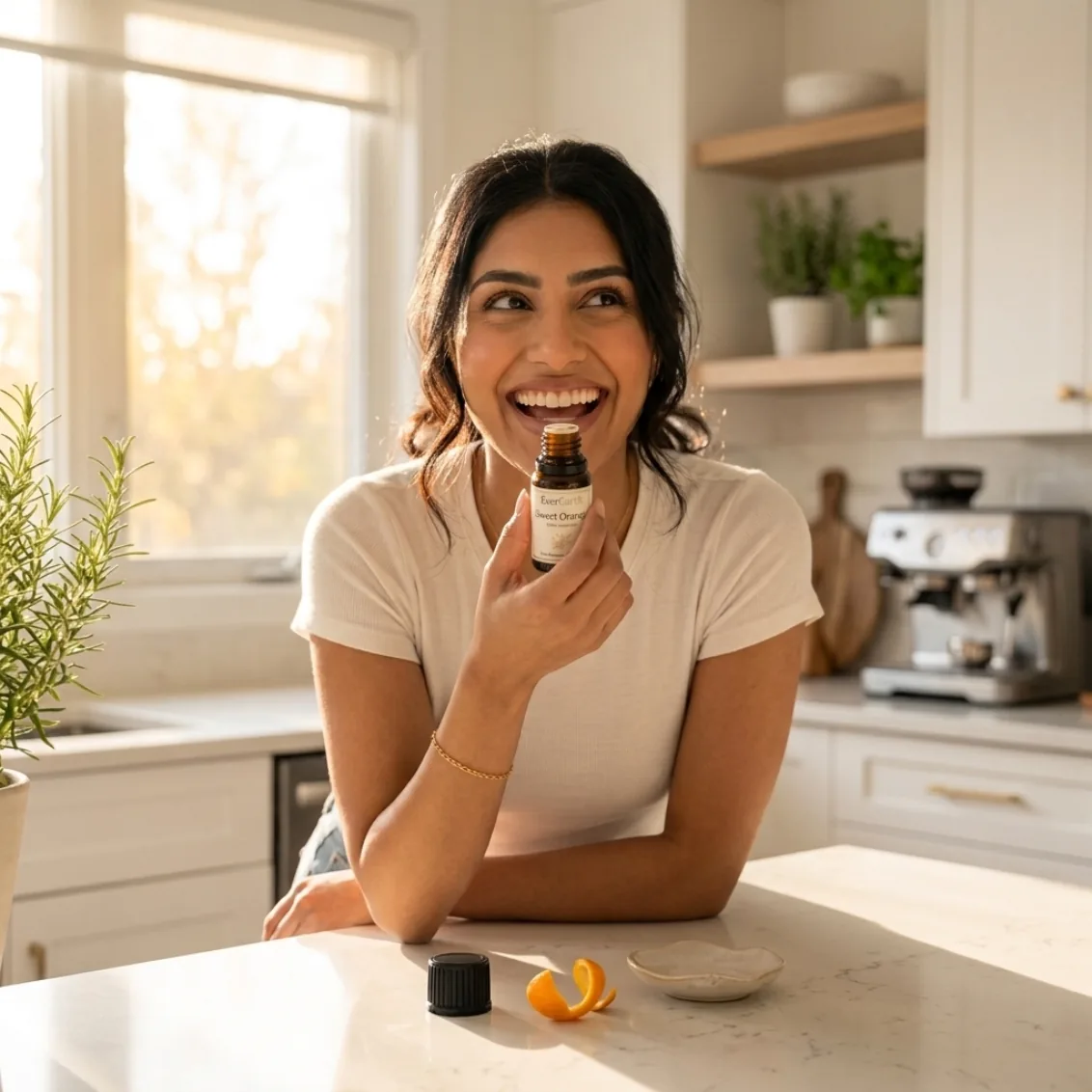
For a 200ml tank, three to five drops of a single oil is plenty. Lavender, jasmine, and lemon are forgiving. Peppermint, eucalyptus, and tea tree are stronger, start with two or three drops. Run the diffuser for thirty to sixty minutes, then let the room rest. Continuous use all day wastes oil and dulls your sense of smell.
Method two, topical use (with a carrier)
Essential oils are strong. You should not apply them neat to skin. To use lavender or peppermint on your wrists or the back of your neck, mix one or two drops into a teaspoon of a carrier oil, jojoba, sweet almond, and fractionated coconut all work. That dilutes the oil to a safe level and helps it spread.
A useful rule: for adults, a 2% dilution is a sensible ceiling for general use. That is roughly twelve drops of essential oil per 30ml of carrier. Less for sensitive skin, less for children, and always patch-test a small area first if you have never used the oil before.
Keep essential oils away from eyes, inner ears, and broken skin. If any oil gets somewhere it should not, do not rinse with water, use a carrier oil first to lift it, then wash.
Method three, passive scenting
This is the low-effort option. A drop or two of essential oil on a cotton pad, tucked into a linen drawer, a car door pocket, or the fabric of a lampshade (not the bulb), gives you a soft, local scent without any equipment. Refresh every fortnight or so.
A pot of hot (not boiling) water with two drops of eucalyptus on the kitchen table works as a very simple room diffuser. You can also add a couple of drops to the cardboard tube of a toilet roll for a light scent every time the roll turns.
Things to skip
Do not add essential oils to drinking water, and do not swallow them. The internal use of essential oils belongs firmly with qualified aromatherapists, not blog posts. The mucous membranes of your mouth and stomach are not built for undiluted plant concentrates, and the risk of irritation is much higher than the possible benefit.
Do not put essential oils on a hot candle wax pool, they are flammable and the scent burns off before it disperses. Use a candle warmer or a proper diffuser instead.
Do not use essential oils around cats without checking first. Cats process some oils very differently from humans, and a few oils that are safe for you (tea tree in particular) are not safe for them. Diffuse in a room the cat can leave, and never apply oils to a cat.
A sensible starter routine
Buy one bottle of lavender, one of jasmine, and one of peppermint. Buy a small ultrasonic diffuser. In the morning, diffuse peppermint alone or with jasmine for a fresh start. In the evening, diffuse lavender with jasmine for a soft wind-down. That is a full daily rhythm from three small bottles.
After a fortnight of that, you will know which scents you actually reach for, and you can add a fourth oil (eucalyptus, lemon, or tea tree are all good next steps) with real information rather than guesswork.
The honest takeaway
Essential oils are a small, quiet upgrade to the atmosphere of your home. They are not medicine, they are not magic, and no single oil will change your life. Used gently, in the right method, on repeat, they make ordinary rooms feel a little more considered. That is the whole thing, and it is a nice thing.